Tesla Hardware 4.5 Revealed: Bridging the Gap to AI5 & New Incentives
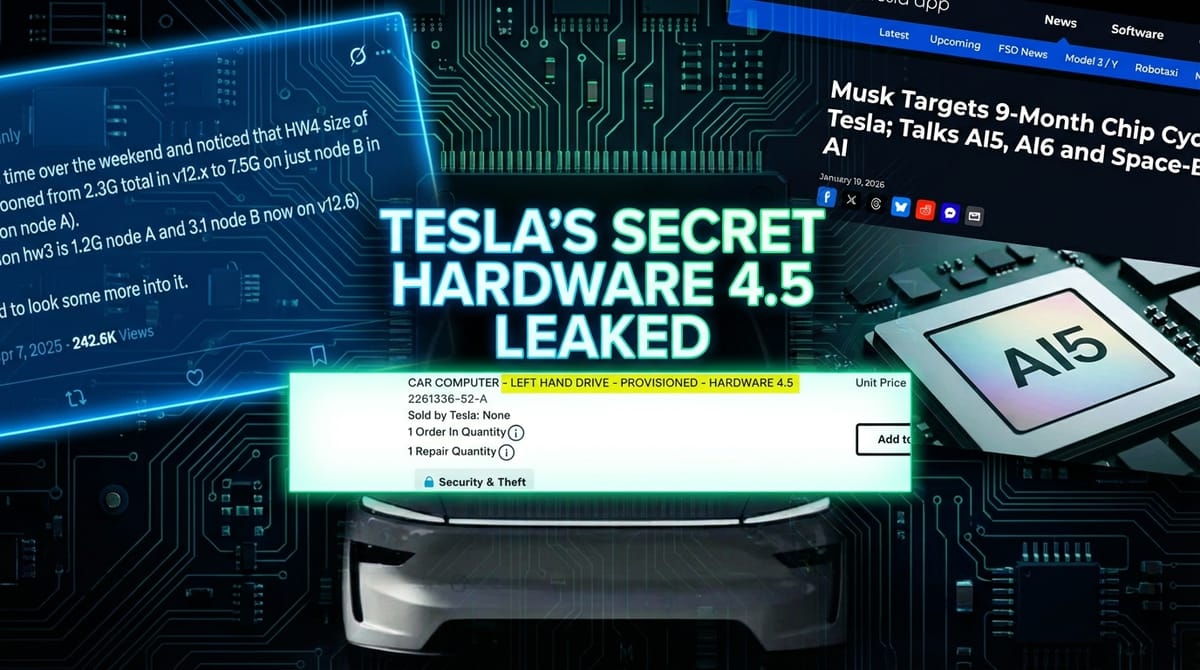
As Tesla races toward autonomous driving supremacy, the limitations of current hardware and the promises of future technology are colliding. A new picture is emerging regarding Tesla's silicon roadmap, suggesting that the company is quietly laying the groundwork for an interim update before the massive leap to AI5. Between memory bottlenecks on Hardware 4 and leaks of a new "Hardware 4.5," here is a comprehensive review of the current state of Tesla's self-driving computers and what it means for potential buyers.
The Hardware 4 Bottleneck
Recent data suggests that Tesla's current Hardware 4 (HW4/AI4) is rapidly approaching its physical limits. While originally touted as a significant upgrade over HW3, practical application in the Full Self-Driving (FSD) beta is showing strain.
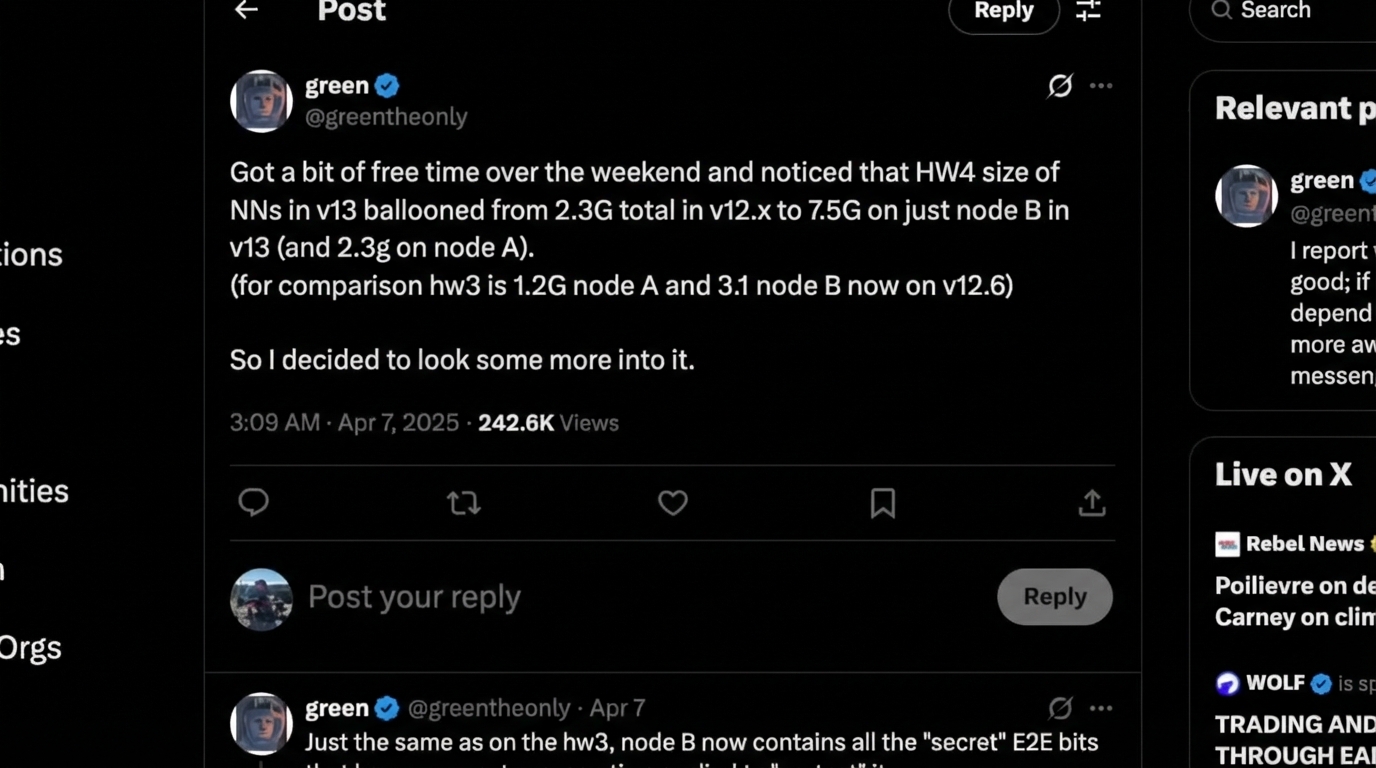
According to findings by hacker GreenTheOnly, HW4 is hitting a memory ceiling. Individual processing nodes are reportedly consuming roughly 7.5GB of the available 8GB of RAM. This leaves virtually no headroom for future model expansion without aggressive compression, suggesting that the platform is nearing its practical maximum capability just as the race for autonomy intensifies.
The Secret Bridge: Hardware 4.5
With AI5 production not expected to reach volume until mid-2027, Tesla appears to need a bridge solution. Evidence has surfaced in the Tesla parts catalog indicating the existence of "Hardware 4.5."
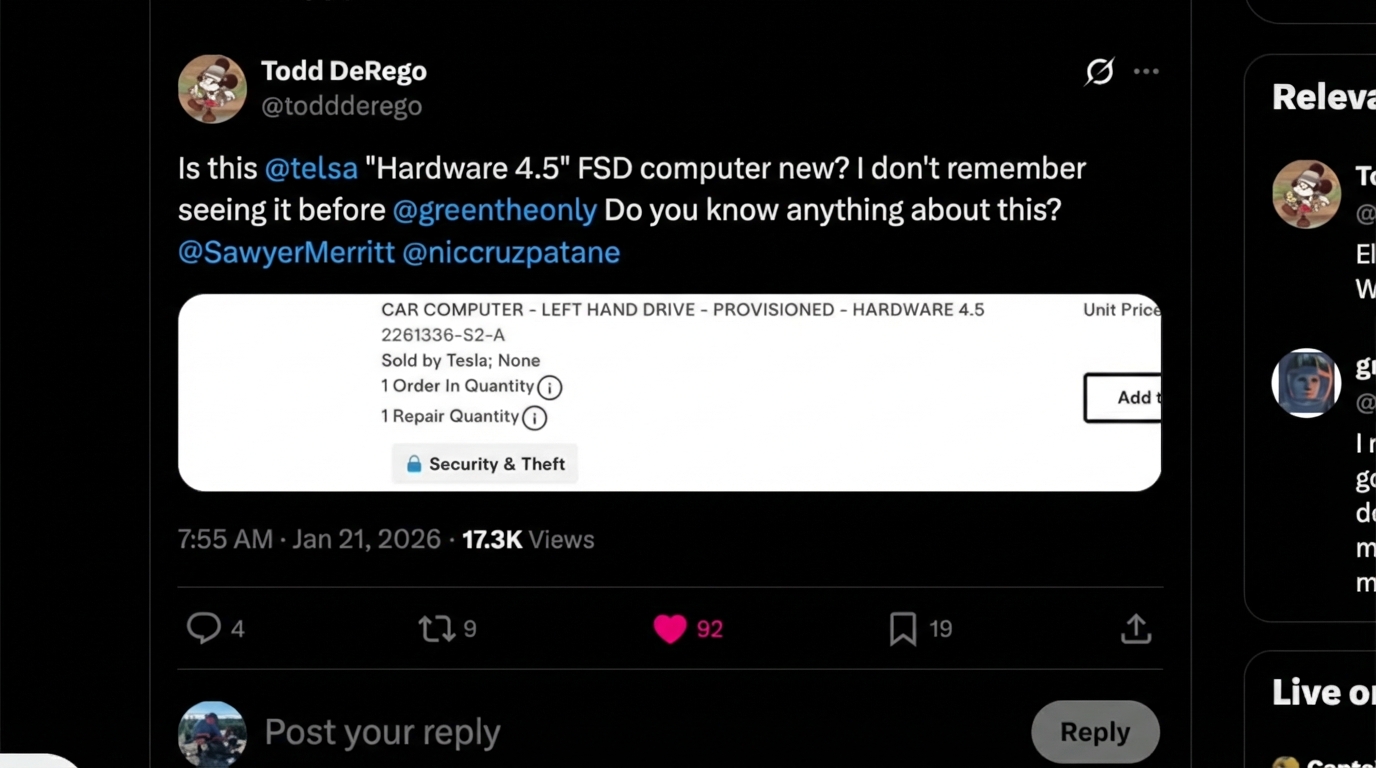
A user discovered a new part listing labeled "Car Computer... Provisioned - Hardware 4.5" with a unique part number. This isn't just a software rebrand; it implies a physical change to the board. Firmware code references suggest this new board might utilize a 3-SOC (System on Chip) design, up from the two nodes found in HW3 and HW4.
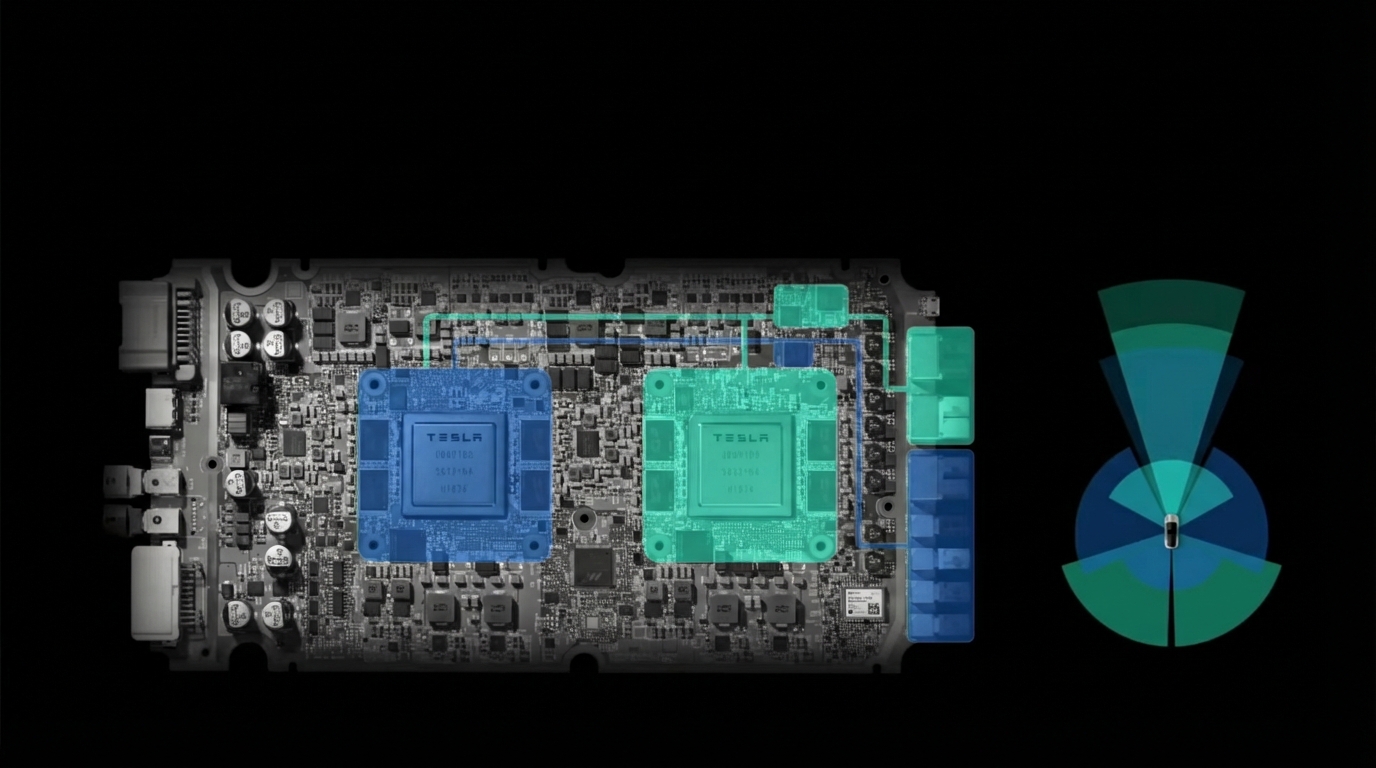
This third node would provide critical redundancy and additional compute power. It acts as a necessary stopgap, allowing Tesla to collect data and refine models that are too heavy for HW4 but necessary to train the future AI5 architecture. If you have recently taken delivery of a Tesla, checking the sticker on the computer behind the glovebox might reveal if you have this latest iteration.
The Aggressive Roadmap to AI5
Elon Musk has outlined an incredibly aggressive timeline for future custom silicon. The upcoming AI5 chip is expected to be a massive leap, offering 8x the raw compute and significantly more memory (up to 144GB) compared to current iterations. However, because AI5 requires a complete redesign of the vehicle's thermal and electrical systems, it cannot be retrofitted into older cars.
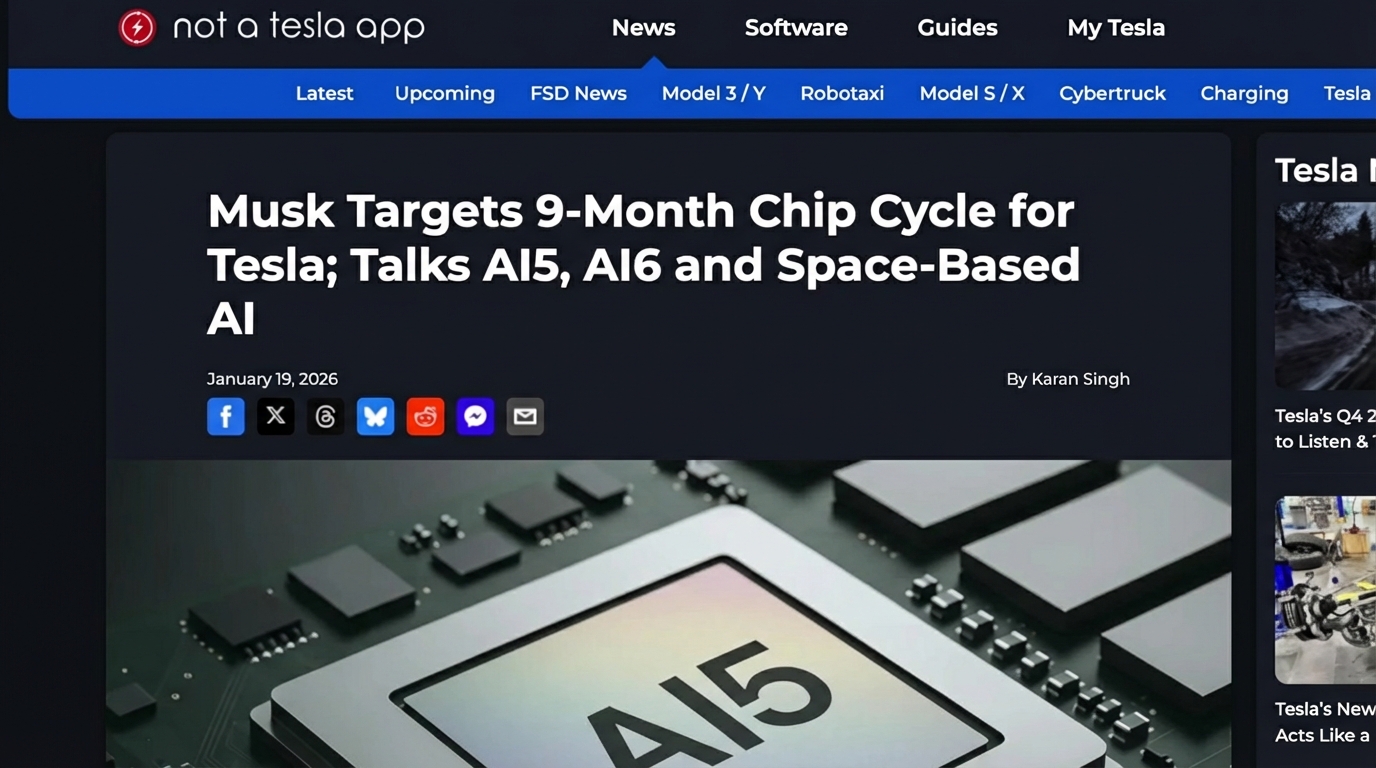
The roadmap doesn't stop there. Tesla plans to iterate chips on a roughly 9-month cycle—moving through AI6, AI7, and beyond. AI6 will focus on Optimus and data centers, while later generations will target space-based compute for SpaceX. This rapid cadence is designed to keep Tesla ahead of competitors, though it raises questions about how quickly consumer vehicles will become "outdated."
Limited-Time Incentives
Switching gears to immediate purchasing advice, Tesla has launched a short-term incentive for Model 3 and Model Y inventory vehicles.
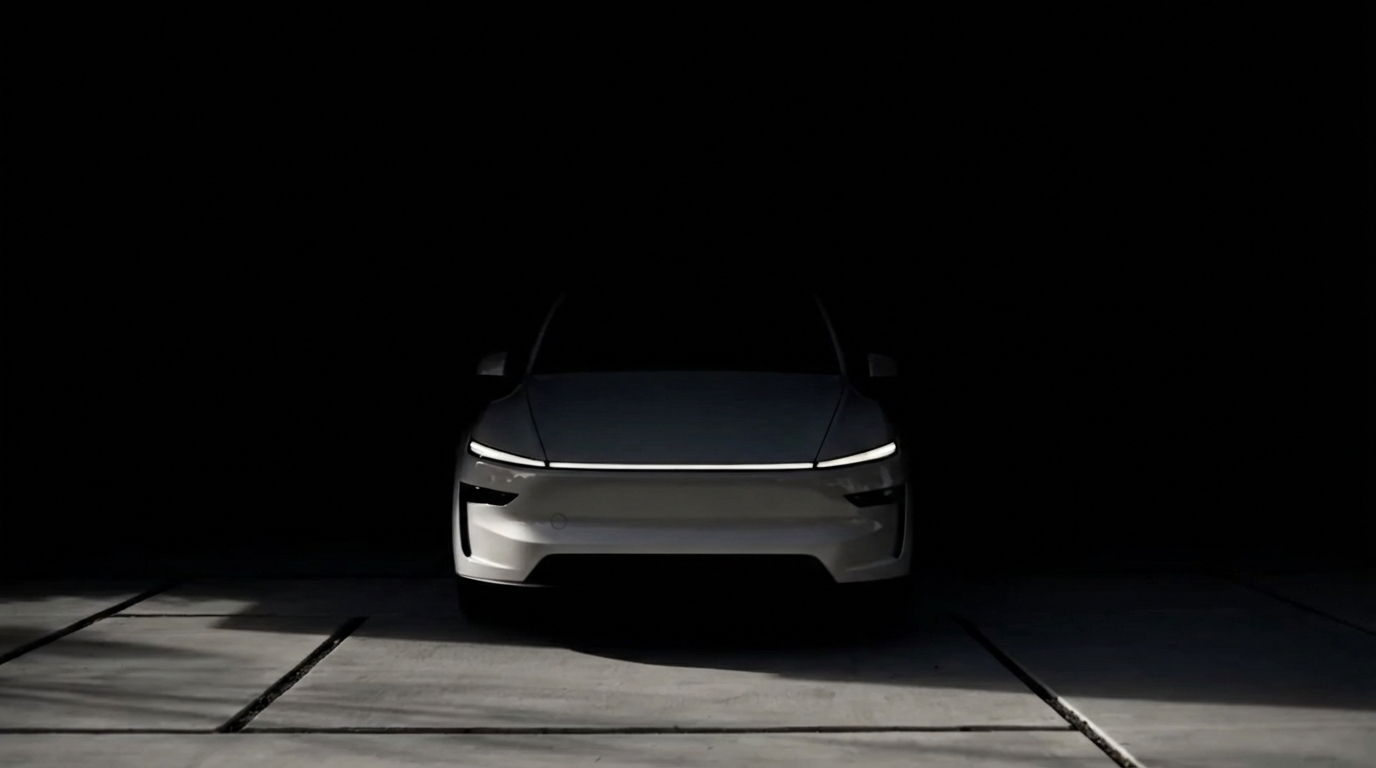
Until February 2nd, buyers can receive one free paid upgrade option on eligible inventory cars. This effectively zeros out the cost for premium paint colors (like Ultra Red) or the white interior upgrade. The discount is applied directly to the listed inventory price, offering a savings of roughly $1,000 to $2,000 depending on the option chosen.
Analysis: Pros and Cons of the Roadmap
Pros:
- Addressed Bottlenecks: HW4.5 seems to solve the immediate RAM limitation of HW4, ensuring FSD development doesn't stall.
- Future Proofing: The move to AI5 and beyond shows a commitment to achieving Level 4/5 autonomy with hardware that finally matches the software's ambition.
- Better Redundancy: The potential 3-SOC design in HW4.5 offers better safety margins for autonomous features.
Cons:
- Obsolescence: Owners of early HW4 vehicles may feel shortchanged knowing their hardware is already hitting memory limits.
- No Retrofits: The confirmation that AI5 requires new thermal/electrical harnesses reinforces that current cars will likely never see that upgrade.
- Fragmented Fleet: rapid hardware iterations (HW3, HW4, HW4.5, AI5) make optimizing software for all versions increasingly difficult.
Final Verdict
The discovery of Hardware 4.5 is a positive development for the technology but a complicated one for the consumer. It confirms that Tesla is reacting quickly to hardware constraints. If you are in the market for a Tesla right now, the existence of HW4.5—combined with the free option incentive—makes it a compelling time to buy, provided you can verify the vehicle comes with the latest board. However, for those seeking the "ultimate" FSD machine, the wait for the native AI5 platform in 2026/2027 continues.